

Haptics and the 3D Internet
What haptics means for simulation-based training, remote operation, and advanced content design.
Why haptics, and why now?
The recent exponential increase in content creation for the 3D internet is ensuring a vast and rich diversity of experiences to meet the endless needs of those of us seeking to not only see the virtual world, but to touch it too. Such is the function of haptic technology – the electromechanical stimulation of the sense of touch.
This technology has enabled Haply Robotics to create exciting applications in areas like the metaverse, industrial robotics, automation and supervision, and VR (virtual reality) simulation. New technologies like enterprise 3D displays, simulation engines, and 5G are creating a wealth of opportunities to build transformative technologies.
This, in conjunction with the developments surrounding the metaverse and VR, has made for a tech ecosystem that is ready for an advanced 3D mouse that enables users to interact with the growing 3D internet in ways never before possible. Haptic technology gives us a sense of touch when engaging with digital experiences, paving the way towards a more connected future. As a result, we anticipate the main areas of application for haptic devices to include:
Simulation-Based Skills Training
New Ways to Create and Consume 3D Content
Remote Device Operation
For the past year, we have used NVIDIA’s Omniverse™ technology and NVIDIA accelerated computing systems such as the RTXA6000 to build touch-enabled applications for the Mediverse™, or the medical metaverse. We invite you to join our panel session at the virtual NVIDIA GTC on September 21 at 11 AM PDT, where our cofounder, Colin Gallacher, and other thought leaders in medical imaging, genomics, biopharma, and medical devices, will discuss healthcare applications of robotics, AR technologies and more.
Here are all the ways touch-enabled devices will shape our future:
Simulation-Based Skills Training
Training surgeons is difficult, time consuming, and expensive, but there’s no better teacher than experience.
This is why a simulation-based approach to skills training is a highly effective way to learn.
Providing trainees the opportunity to practice learned skills in real-life situations is paramount to growth, and simulated training scenarios allow students to run through high-stakes procedures with close to zero risk.
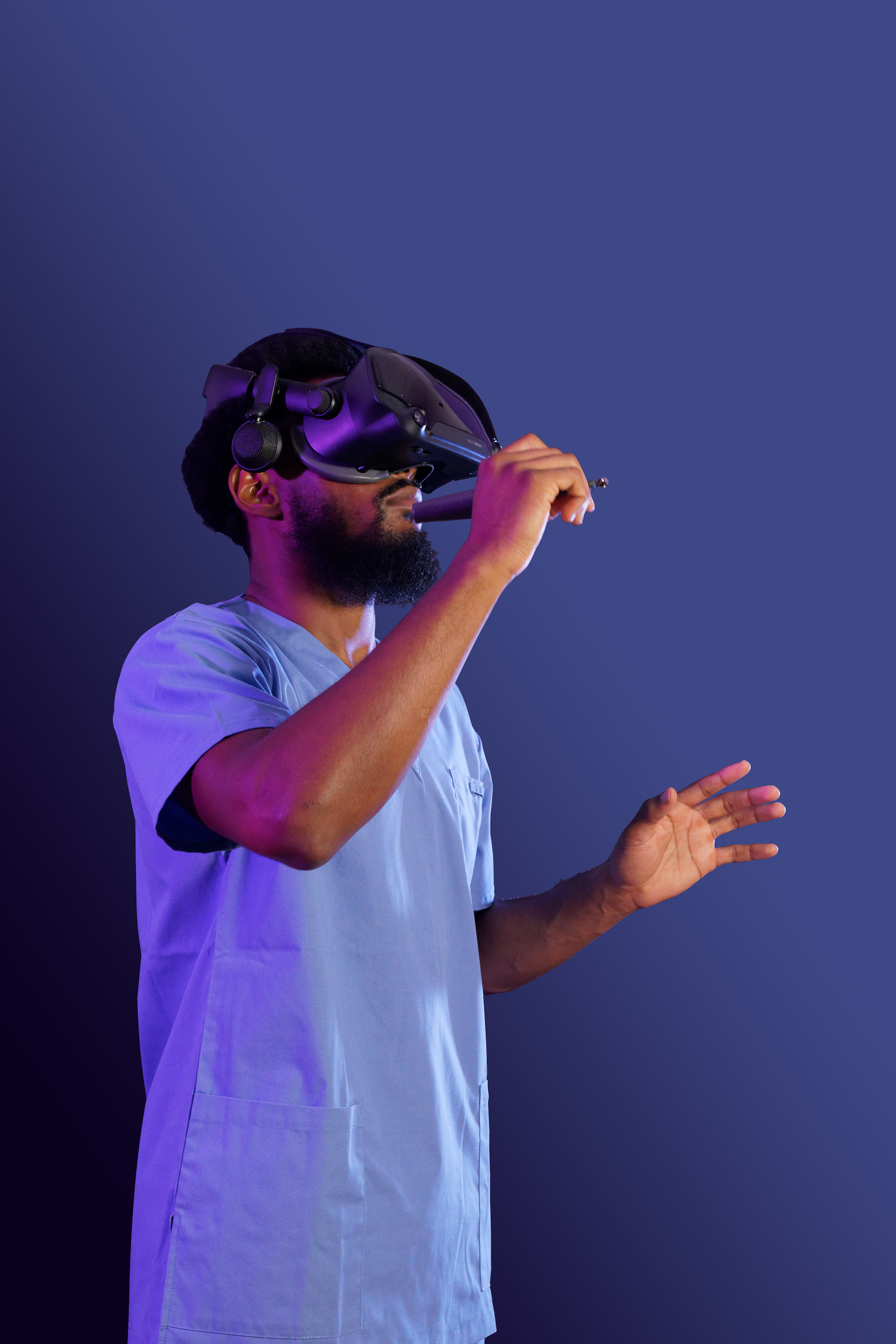
Haptic simulation training takes that a step further, facilitating skill mastery by replicating the exact sensations of real-life scenarios and stimulating deep focus by providing a more natural and immersive learning environment compared to traditional simulators.
The more authentic the simulation environment is, the better the results of training.
This is particularly important for skills that require very precise and tactile feedback and movements.
One such example is virtual medical training.
The Haply Inverse3 is a state-of-the-art force-feedback haptic controller designed to precisely emulate complex sensations, such as incising soft tissue with a scalpel or drilling through bone tissue.
This empowers students, surgeons, and other healthcare professionals to hone and perfect life-saving procedures before ever setting foot in an operating room.
Other applications for haptic simulators include dangerous task training.
The use of a haptic controller coupled with a VR headset can transport trainees to highly realistic environments without the risk of endangering themselves or others or the cost of building a physical training space.
For this reason, haptic simulators are commonly used for:
Military training
Pilot training
Firefighter training
Manufacturing task training
Haptic devices can accurately simulate the force feedback received from routine hands-on operations, making them ideal tools for learning repetitive industrial processes.
New Ways to Create and Consume 3D Content
Unity, Epic Games Unreal Engine, Dassault Systemes SOLIDWORKS and CATIA, Maxon ZBrush, Autodesk Maya, AutoCAD, Inventor, Blender, McNeel Rhino — the list goes on.
Since their introduction in the 1960s, 3D modeling tools have become central to workflows in engineering, architecture, gaming, and industrial design.
They have transformed how work is done across many industries.
As the 3D internet and metaverse evolve, we will see even more new and exciting ways to interact with 3D content.
Gone are the days where architects had to carry heavy portfolios of hand-drawn plans and animators had to manually draw each frame of a cartoon movie.
Companies like Meta, Apple, and HP are investing billions into next-generation displays.
The future will allow users to comfortably blend tasks performed in both 2D and 3D environments.
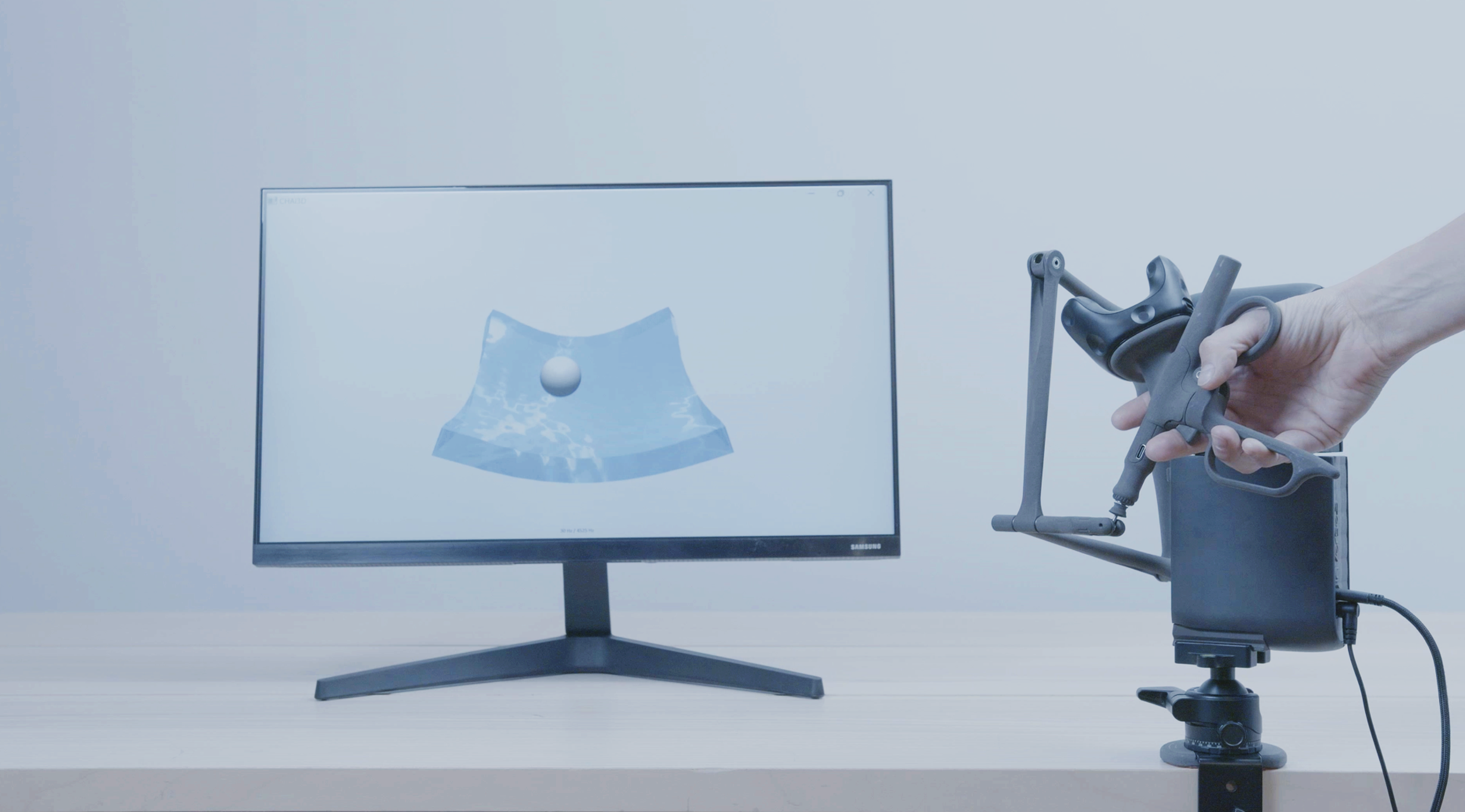
Introducing haptic design has the potential to transform creative fields with new and improved user interactions.
Haply believes that enabling a seamless transition from 2D to 3D content is vital for any input device.
Haptic content will allow users to naturally navigate spatial environments and feel what they digitally produce, transforming product development systems and speeding up processes across industries.
The future of content creation and consumption will focus on making virtual experiences as photorealistic and immersive as possible.
The rising popularity of haptic controllers signify a major step in that direction.
Remote Device Operation
The arrival of 5G means more than faster internet.
It also enables increased capacity for connected devices and remote performance, such as VR streaming on NVIDIA’s CloudXR platform.
With 5G’s reduced latency, reliable wireless communication supporting haptic technology is finally possible.
Teleoperation in robotics combines robotic manipulation with human decision-making abilities.
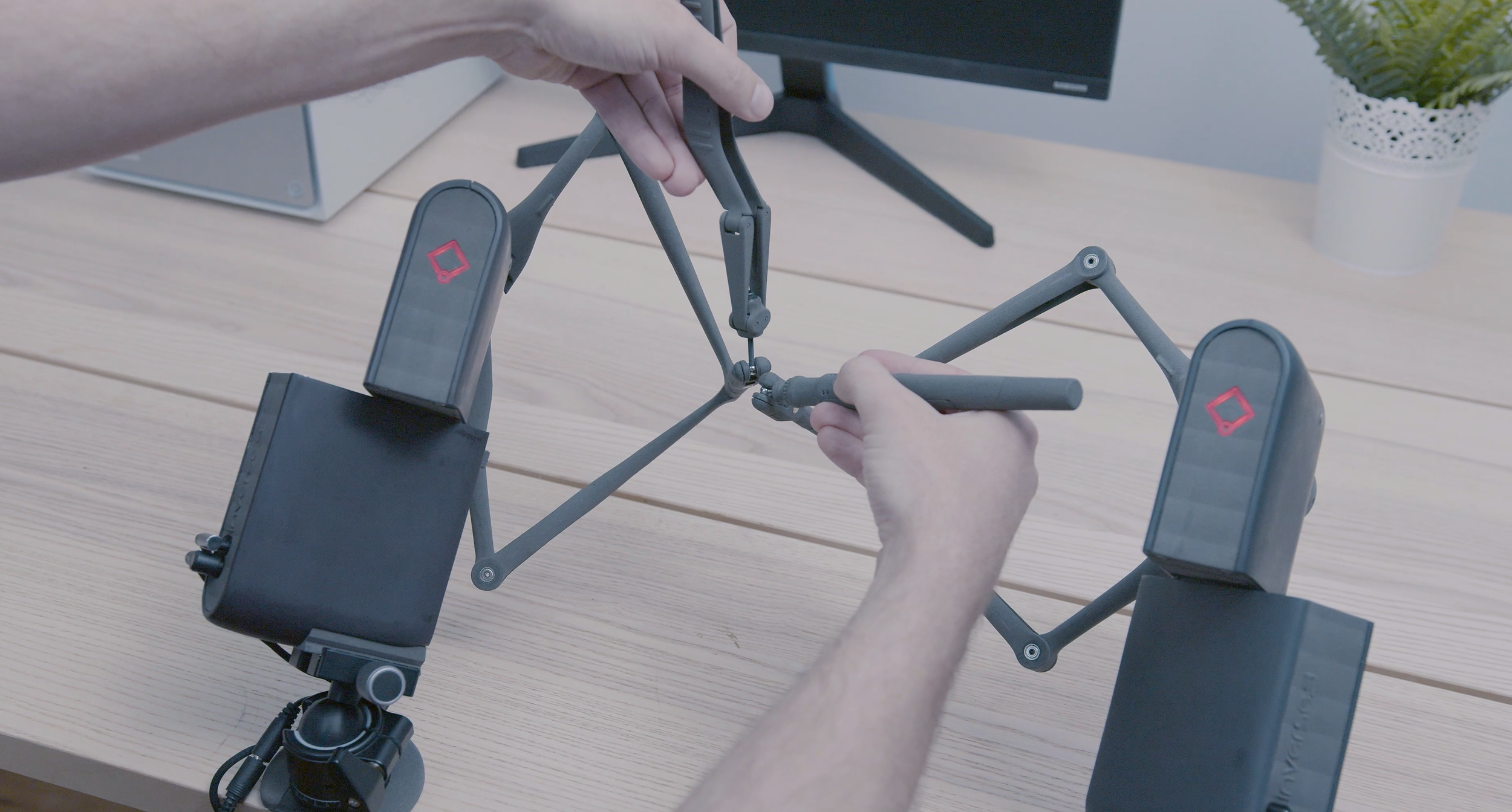
Two-way teleoperation provides haptic feedback that allows operators to feel interaction forces and intuitively control remotely operated robots.
This feedback is essential for delicate tasks involving:
Fragile objects
Dangerous environments
High precision operations
Examples include:
Inspecting construction sites with drones
Controlling surgical robots
Supervising industrial robots remotely
Conducting rescue operations in mines
Remote-controlled robots, vehicles, and devices are not new, but adding haptic feedback creates exciting possibilities for advanced remote operations.
Haptic controllers provide a natural and intuitive way to supervise machinery by adding touch feedback as an additional sensory channel.
5G networks are the infrastructure replacing highways in the modern digital universe.
Just as 2D mice and tablets replaced paper and pen, Haply's haptic technologies blend the advantages of traditional input devices with the spatial requirements of the 21st century.
Designed and built for a 3D world, Haply products are at the forefront of technological evolution.
11.2 million AR/VR headsets were sold last year alone, showing increasing demand for simulated experiences and realistic virtual environments.
While VR spaces continue improving, haptics add an important sensory component with benefits across:
3D design
Advanced training
Telepresence
Remote manipulation
At Haply, the focus is on precision and ergonomics within enterprise environments.
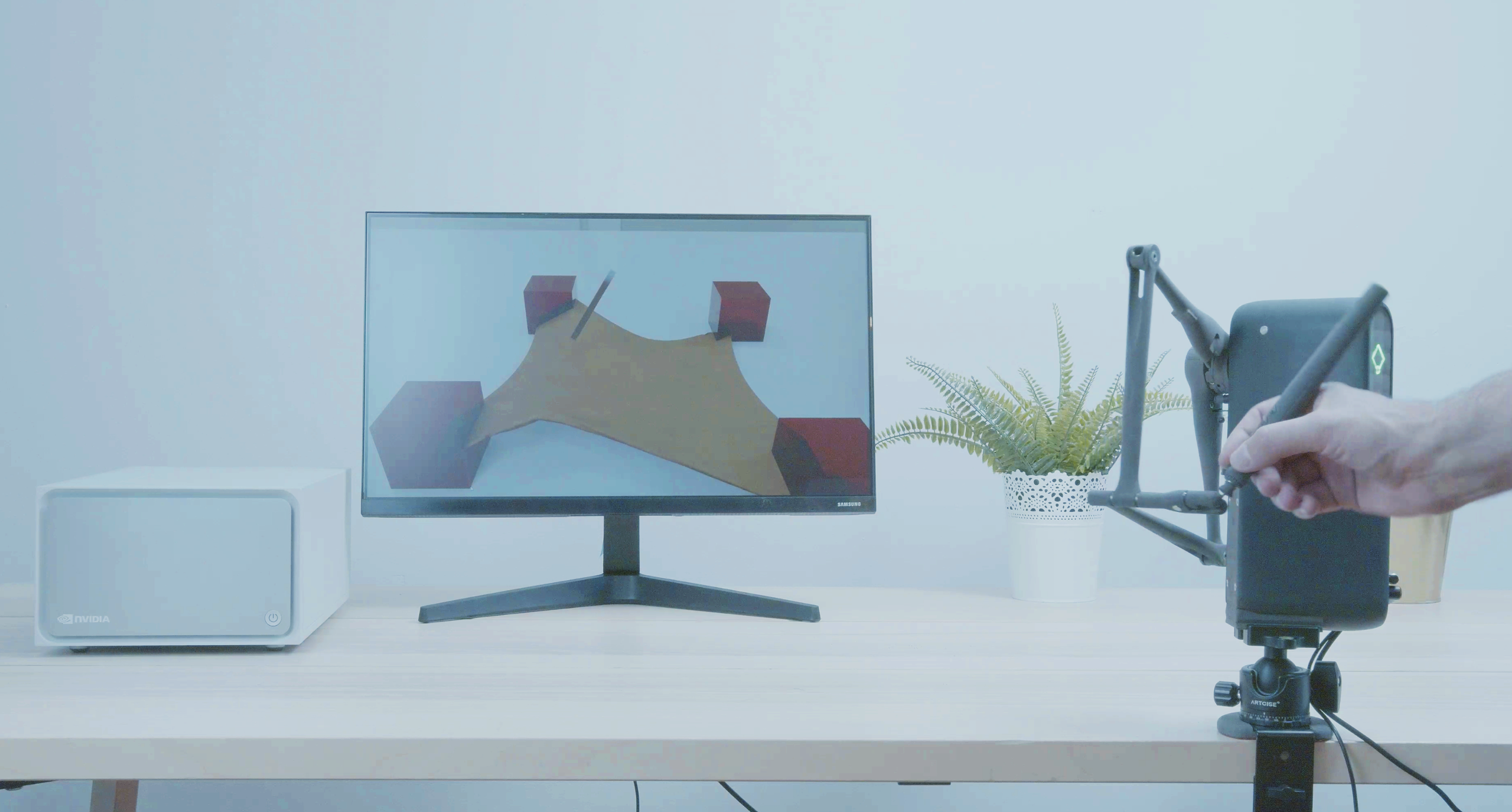
Using the Inverse3 — the world’s first lightweight, reconfigurable, and completely portable haptic interface that replicates the sense of touch for specialized tasks — companies will create revolutionary solutions to:
Train Skills Using Simulations
Create and Consume 3D Content
Operate Remote Devices
To learn more about the future of this technology and how NVIDIA technology supports advanced graphics, simulation, and healthcare applications through NVIDIA Clara, Haply invites users to join their panel session at NVIDIA GTC.
Event: NVIDIA GTC
Date: Wednesday September 21
Time: 11 AM PDT
Excerpt:
What it means for simulation-based training, remote operation, and advanced content design
